After the end of western Roman imperial government in the fifth century, the Roman inheritance survived in different forms. The eastern empire continued from Constantinople, while new kingdoms developed in the west. In 800, Charlemagne's coronation created a new western imperial claim. Both Byzantine and Carolingian rulers drew on Rome and Christianity, but their territories, institutions and cultures were distinct.
The survival of the eastern Roman Empire
The division of imperial rule after Theodosius I's death in 395 placed eastern and western territories under separate emperors. During the fifth century, western imperial authority weakened as kingdoms formed within its former provinces. The deposition of the western emperor in 476 is a conventional landmark in that process. It did not end the Roman Empire in the east.
The empire now called Byzantine was Roman in its own understanding. Constantinople, founded as an imperial capital by Constantine, occupied a strategic position between Europe and Asia. Its fortifications, access to sea routes and administrative importance helped it withstand repeated threats. Greek gradually became the dominant language of government and culture, although Roman law and imperial traditions remained fundamental.
Justinian's imperial ambitions
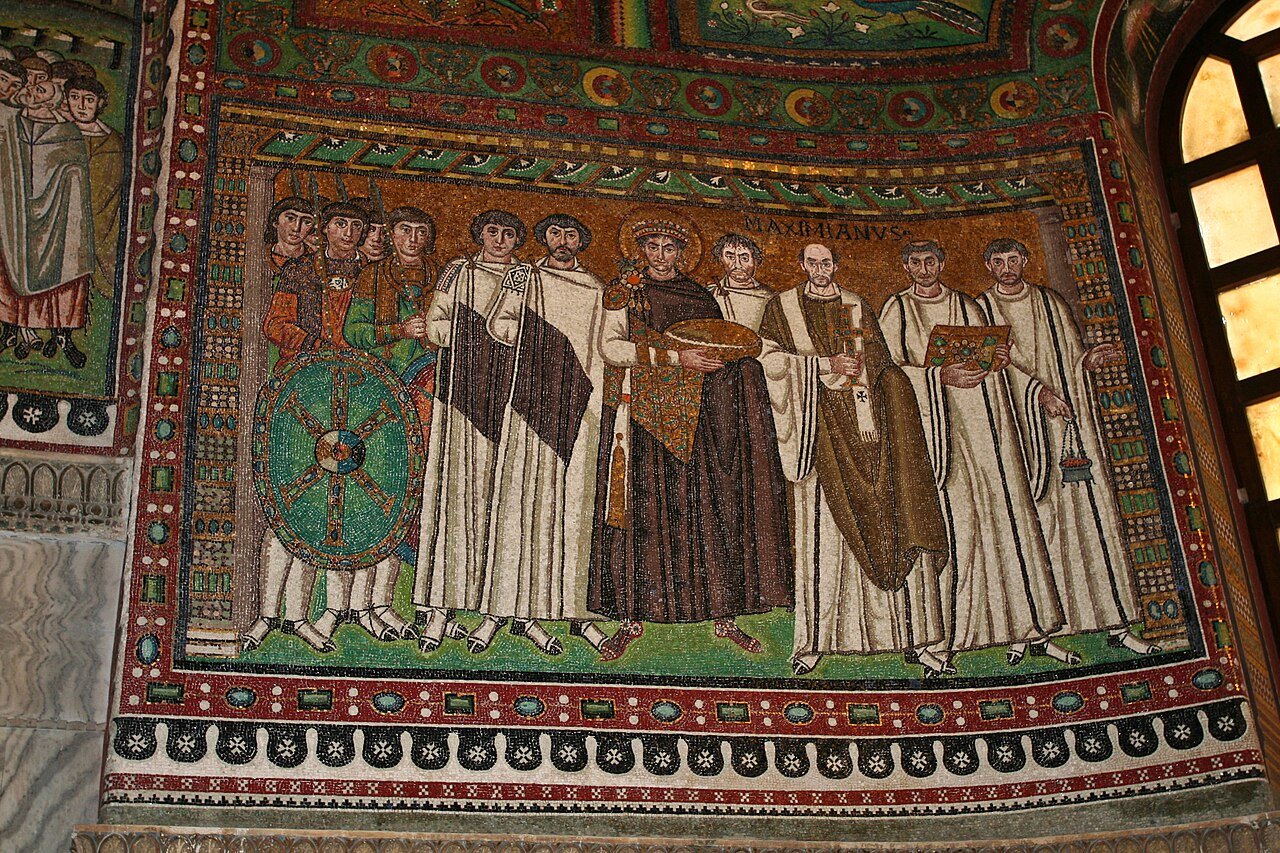
Justinian ruled from 527 to 565. He sought to recover former western territories, and his armies conquered North Africa, Italy and part of southern Spain. These campaigns restored imperial control over substantial regions, but they were expensive, destructive and difficult to sustain. Later rulers faced renewed military pressure and lost much of this territory.
Justinian also ordered the compilation and organisation of Roman law. The Code gathered imperial legislation, while the Digest collected writings by Roman legal specialists. Together with related works, they preserved material that later influenced legal traditions far beyond Byzantium.
In Constantinople, Justinian commissioned Hagia Sophia, built between 532 and 537. Its enormous dome and rich decoration expressed the connection between Christian worship and imperial prestige. The emperor's authority was presented as divinely sanctioned. The Greek title basileus came to designate the emperor; it should not be translated literally as “king of kings”.
Christianity in the Byzantine world
Emperors played an important role in church affairs, but their relationships with bishops and patriarchs could involve disagreement as well as cooperation. Religious images, or icons, became a distinctive feature of Byzantine worship, although their use was contested during periods of iconoclasm. Monks and missionaries helped carry Byzantine Christianity and written culture into parts of eastern Europe.
Eastern and western churches gradually developed differences in language, practices, doctrine and ideas about authority. The events of 1054 are commonly used to mark the schism between the churches later called Orthodox and Catholic. The separation was a prolonged process, not simply an argument over married priests or the language of worship.
Byzantine territory changed repeatedly over the centuries. Constantinople suffered conquest by crusaders in 1204, was recovered in 1261, and finally fell to the Ottoman sultan Mehmed II in 1453. The empire ended, but its religious, artistic and legal traditions continued to influence other societies.
Charlemagne and a western empire
In western Europe, the Frankish kingdom became especially powerful. Charlemagne became king in 768 and expanded his rule through wars against peoples including the Lombards and Saxons. Conquest was closely connected with the spread of Christianity, sometimes through coercion and violence as well as preaching.
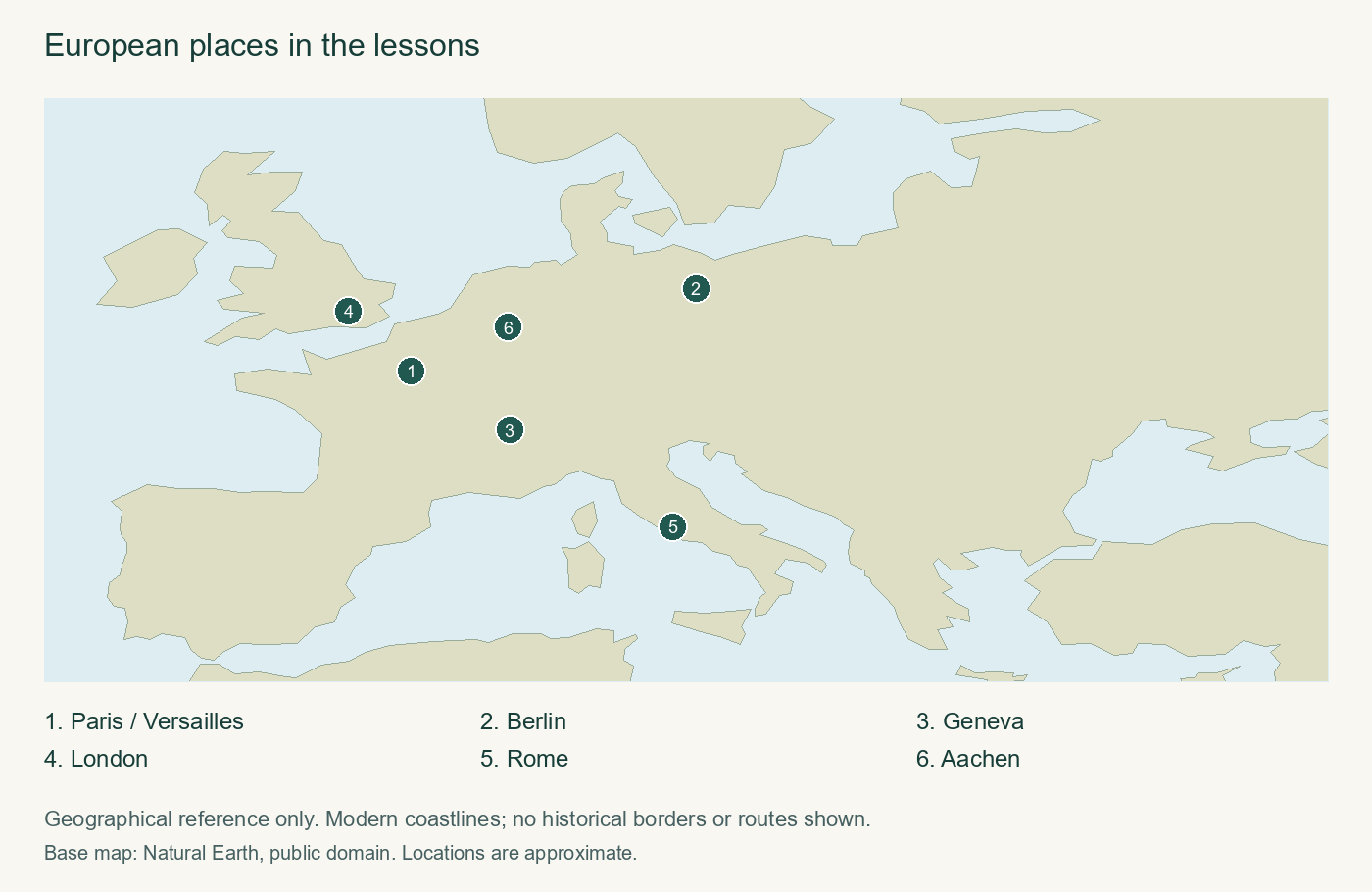
Pope Leo III crowned Charlemagne emperor in Rome on Christmas Day 800. The ceremony associated his rule with the Roman imperial past and with the protection of Christianity. It did not recreate the old Roman Empire in its entirety or make the western and Byzantine rulers part of a single government.
Charlemagne's palace at Aachen was an important centre of rule. Counts exercised local authority, organising justice and military obligations. Royal envoys known as missi dominici inspected their conduct and transmitted instructions. Written orders called capitularies helped communicate decisions, although royal power still depended heavily on personal loyalty and cooperation with local elites.
Learning, religion and the limits of unity
Charlemagne encouraged schools, scholarship and the copying of manuscripts. Scholars at court and in monasteries worked to improve religious education and the accuracy of texts. The development of a clear script, Carolingian minuscule, aided this work. Latin connected educated people across the western Church, while most inhabitants spoke other languages in daily life.
This cultural revival did not amount to universal schooling. Its strongest effects were among clergy and ruling elites, but the manuscripts it preserved became an important inheritance for later centuries. Churches, monasteries and decorated religious objects also expressed the alliance of political and religious power.
After Charlemagne's death in 814, dynastic struggles weakened imperial unity. The Treaty of Verdun in 843 divided the empire between three of his grandsons. Byzantium and the Carolingian world thus show two different attempts to sustain a Christian imperial order, each shaped by its own institutions and political challenges.
Revision questions
Write an answer before opening the explanation. Your answers stay in this browser.
01 Why did the Roman Empire continue after 476?
Read the explanation
The empire now called Byzantine was Roman in its own understanding. Constantinople, founded as an imperial capital by Constantine, occupied a strategic position between Europe and Asia. Its fortifications, access to sea routes and administrative importance helped it withstand repeated threats. Greek gradually became the dominant language of government and culture, although Roman law and imperial traditions remained fundamental.
02 How did Justinian express imperial power through war, law and building?
Read the explanation
Justinian also ordered the compilation and organisation of Roman law. The Code gathered imperial legislation, while the Digest collected writings by Roman legal specialists. Together with related works, they preserved material that later influenced legal traditions far beyond Byzantium.
In Constantinople, Justinian commissioned Hagia Sophia, built between 532 and 537. Its enormous dome and rich decoration expressed the connection between Christian worship and imperial prestige. The emperor's authority was presented as divinely sanctioned. The Greek title basileus came to designate the emperor; it should not be translated literally as “king of kings”.
03 How did Charlemagne acquire and govern his empire?
Read the explanation
Pope Leo III crowned Charlemagne emperor in Rome on Christmas Day 800. The ceremony associated his rule with the Roman imperial past and with the protection of Christianity. It did not recreate the old Roman Empire in its entirety or make the western and Byzantine rulers part of a single government.
Charlemagne's palace at Aachen was an important centre of rule. Counts exercised local authority, organising justice and military obligations. Royal envoys known as missi dominici inspected their conduct and transmitted instructions. Written orders called capitularies helped communicate decisions, although royal power still depended heavily on personal loyalty and cooperation with local elites.
04 What were the achievements and limits of the Carolingian cultural revival?
Read the explanation
This cultural revival did not amount to universal schooling. Its strongest effects were among clergy and ruling elites, but the manuscripts it preserved became an important inheritance for later centuries. Churches, monasteries and decorated religious objects also expressed the alliance of political and religious power.
After Charlemagne's death in 814, dynastic struggles weakened imperial unity. The Treaty of Verdun in 843 divided the empire between three of his grandsons. Byzantium and the Carolingian world thus show two different attempts to sustain a Christian imperial order, each shaped by its own institutions and political challenges.