The Paris Peace Conference opened on 18 January 1919 to negotiate a settlement after the First World War. The armistice of 11 November 1918 had ended the fighting between Germany and the Allies, but it had not settled borders, compensation or future security. The victors now had to reconcile their different interests. The Treaty of Versailles, signed with Germany on 28 June 1919, was one part of a wider settlement with the defeated powers.
A conference shaped by victory and destruction
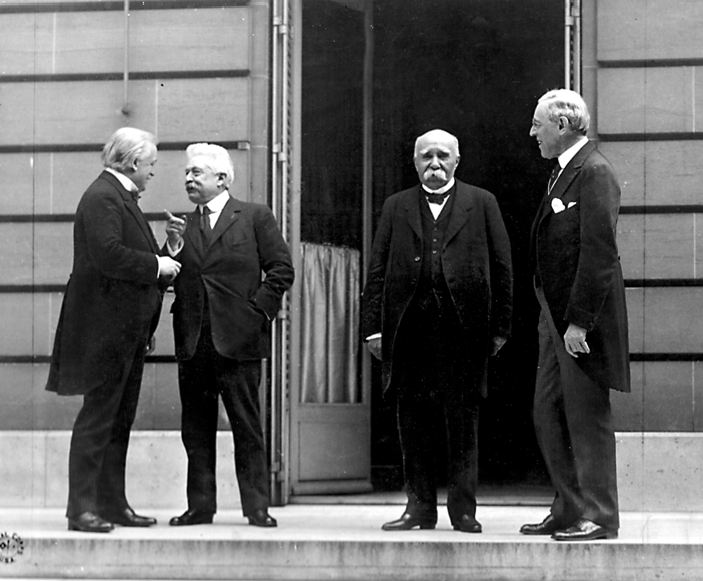
Representatives of many countries attended the conference, but the most influential decisions were made by the major victorious powers. Woodrow Wilson represented the United States, Georges Clemenceau France and David Lloyd George Britain. Italy's Vittorio Orlando joined them in the wider group known as the Big Four. Smaller states and colonial peoples had far less influence.
Germany did not negotiate as an equal participant. Its delegation received the draft terms in May and submitted objections, but the fundamental decisions had already been made. The threat of renewed hostilities restricted Germany's room for manoeuvre. This helped produce the German description of the treaty as a Diktat, or dictated settlement.
The leaders also answered to different publics. France had endured invasion and extensive destruction; Britain had suffered heavy losses and economic strain; the United States had entered the war later and its continental territory had escaped the devastation experienced in Europe. These experiences shaped what each government thought a secure peace required.
Wilson's international vision
Wilson's Fourteen Points, announced in January 1918, offered principles for a new international order. He favoured more open diplomacy, reduced armaments and an association of nations able to protect peace. Self-determination, the idea that peoples should have a meaningful say in their political future, was important to his approach, although it was never applied consistently to every national or colonial group.
Wilson believed that a settlement based only on punishment could encourage future conflict. His central institutional aim was the League of Nations, through which states would negotiate disputes and respond collectively to aggression. He accepted compromises elsewhere to secure its inclusion in the peace settlement.
There were limits to both his principles and his power. Ethnic populations were intermingled, strategic interests competed with national claims, and European empires resisted extending self-determination to their colonies. At home, Wilson also needed the Senate's consent to ratify a treaty, which he ultimately failed to obtain.
Clemenceau and French security
Clemenceau's priorities grew from France's vulnerability to Germany. German forces had invaded in 1870 and again in 1914, and the recent war had devastated industrial and agricultural regions in northern and eastern France. Reparations were intended to help repair these losses, while disarmament would reduce the danger of another attack.
France sought the return of Alsace-Lorraine, annexed by Germany in 1871. It also pressed for strong security arrangements in the Rhineland. French proposals varied, but the key concern was to place an effective barrier between Germany's military power and France. Britain and the United States resisted arrangements they believed would create permanent instability or excessive French dominance.
Clemenceau obtained substantial restrictions on Germany, but not every safeguard he wanted. The Rhineland remained German territory under demilitarisation and temporary Allied occupation. Proposed Anglo-American security guarantees did not become the dependable protection France had expected, especially after the United States rejected the treaty.
Lloyd George between punishment and recovery
Lloyd George faced strong public demands for Germany to pay for the war. Britain's December 1918 election reinforced pressure for a severe settlement. He wanted to protect British naval and imperial interests, obtain compensation and prevent Germany from again dominating Europe.
At the same time, he recognised that an economically ruined Germany could not contribute to European recovery or buy British exports. Severe instability might also encourage revolution. He therefore resisted some French proposals while accepting substantial territorial, military and financial penalties.
This was not a simple position halfway between two extremes. Lloyd George pursued British interests, which sometimes aligned with Wilson and sometimes with Clemenceau. The negotiations were shaped by shifting disagreements over particular issues, rather than three perfectly consistent personal programmes.
The settlement as a compromise
The final treaty included the League Covenant, German disarmament, territorial changes and a responsibility clause forming the legal basis for reparations. The total reparations figure was fixed in 1921, not in the treaty as signed in June 1919. France recovered Alsace-Lorraine and obtained ownership of the Saar coal mines; the Saar territory itself came under League administration for fifteen years before a plebiscite.
Wilson secured the League but accepted an uneven application of self-determination. Clemenceau gained military restrictions and compensation but remained concerned about future security. Lloyd George obtained measures against German military and imperial power while preventing some more radical territorial proposals. None of them could impose his entire programme.
Judging the settlement requires separating the leaders' aims, the actual treaty terms and later developments. Resentment and unresolved security problems mattered, but war in 1939 was not an automatic consequence of decisions made in 1919. Subsequent economic crises, political choices and acts of aggression changed how the settlement operated.
Revision questions
Write an answer before opening the explanation. Your answers stay in this browser.
01 What did Wilson hope to achieve, and what limited his programme?
Read the explanation
Wilson believed that a settlement based only on punishment could encourage future conflict. His central institutional aim was the League of Nations, through which states would negotiate disputes and respond collectively to aggression. He accepted compromises elsewhere to secure its inclusion in the peace settlement.
There were limits to both his principles and his power. Ethnic populations were intermingled, strategic interests competed with national claims, and European empires resisted extending self-determination to their colonies. At home, Wilson also needed the Senate's consent to ratify a treaty, which he ultimately failed to obtain.
02 Why did Clemenceau give priority to French security?
Read the explanation
France sought the return of Alsace-Lorraine, annexed by Germany in 1871. It also pressed for strong security arrangements in the Rhineland. French proposals varied, but the key concern was to place an effective barrier between Germany's military power and France. Britain and the United States resisted arrangements they believed would create permanent instability or excessive French dominance.
Clemenceau obtained substantial restrictions on Germany, but not every safeguard he wanted. The Rhineland remained German territory under demilitarisation and temporary Allied occupation. Proposed Anglo-American security guarantees did not become the dependable protection France had expected, especially after the United States rejected the treaty.
03 Why did Lloyd George combine punishment with concern for German recovery?
Read the explanation
At the same time, he recognised that an economically ruined Germany could not contribute to European recovery or buy British exports. Severe instability might also encourage revolution. He therefore resisted some French proposals while accepting substantial territorial, military and financial penalties.
This was not a simple position halfway between two extremes. Lloyd George pursued British interests, which sometimes aligned with Wilson and sometimes with Clemenceau. The negotiations were shaped by shifting disagreements over particular issues, rather than three perfectly consistent personal programmes.
04 Explain why the final settlement was a compromise.
Read the explanation
Wilson secured the League but accepted an uneven application of self-determination. Clemenceau gained military restrictions and compensation but remained concerned about future security. Lloyd George obtained measures against German military and imperial power while preventing some more radical territorial proposals. None of them could impose his entire programme.
Judging the settlement requires separating the leaders' aims, the actual treaty terms and later developments. Resentment and unresolved security problems mattered, but war in 1939 was not an automatic consequence of decisions made in 1919. Subsequent economic crises, political choices and acts of aggression changed how the settlement operated.