The first states developed as communities created institutions able to govern a territory, organise resources and exercise authority over its population. In the ancient Near East, this process produced both independent city-states and larger territorial kingdoms. Mesopotamia and Egypt illustrate different forms of early government, connected by the importance of agriculture, administration, warfare and religion.
Rivers, cities and territory
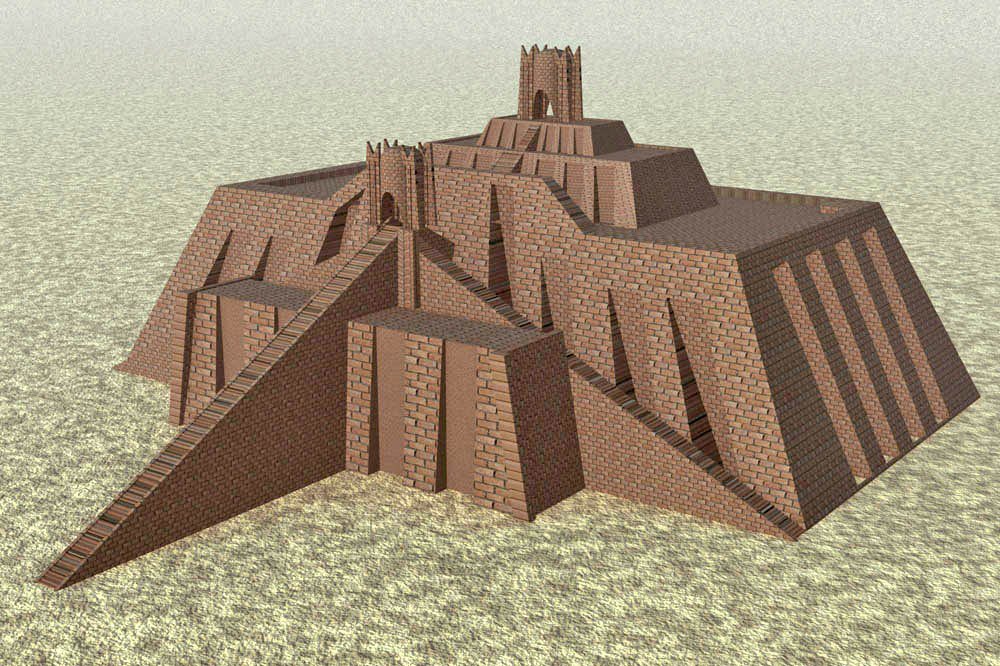
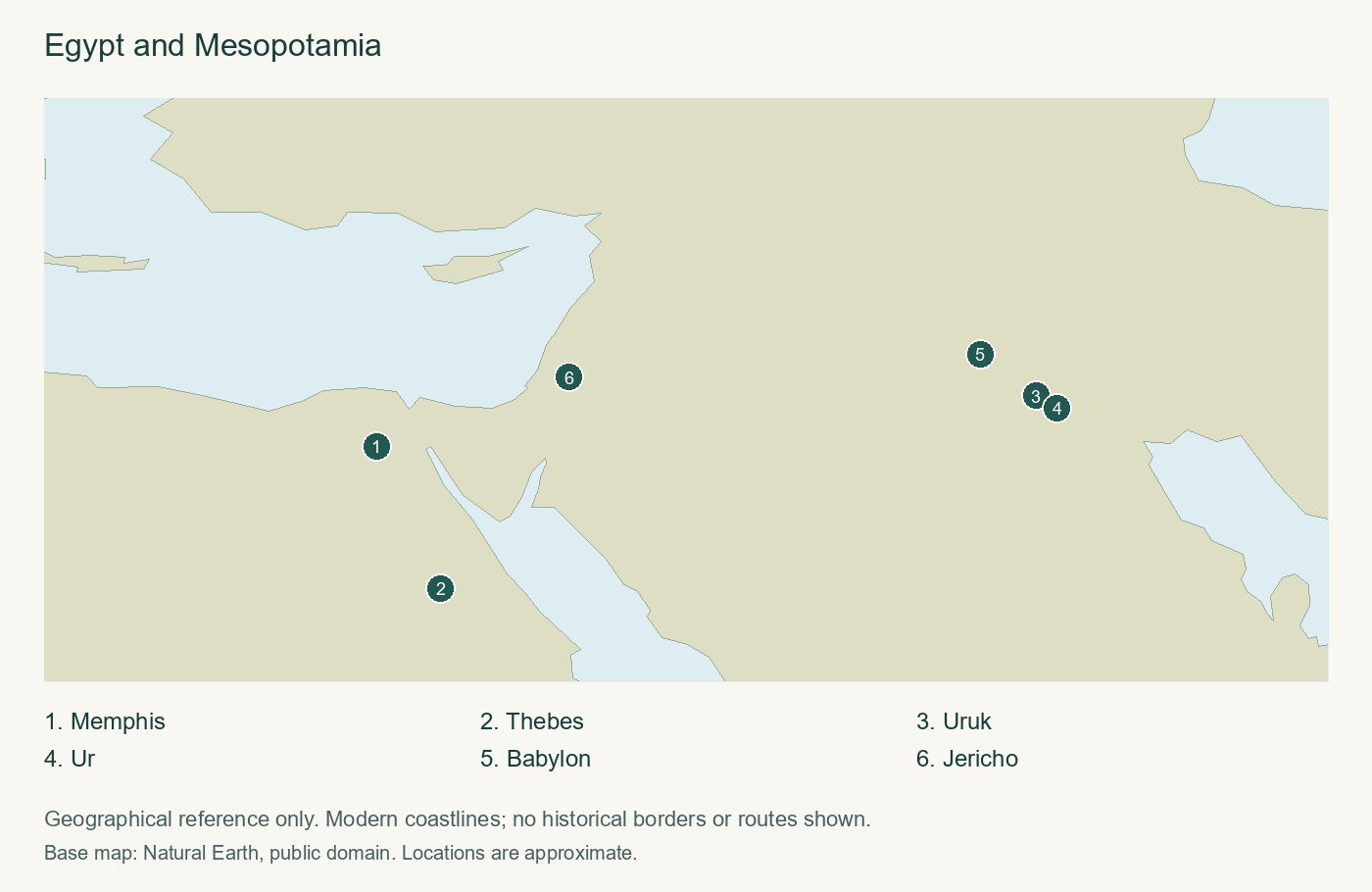
From the fourth millennium BCE, southern Mesopotamia saw the growth of urban centres in the region of the Tigris and Euphrates. A city-state consisted of a city and its surrounding countryside under an independent government. Fields fed the inhabitants, while the city concentrated religious buildings, workshops, storage and political authority. Rival cities could cooperate through trade or fight over land and influence.
Mari, beside the Euphrates in present-day Syria, offers a later example of this organisation. Waterways supported transport, fishing and exchange, and a canal brought water into the city. The royal palace was more than a residence: it was a centre from which people, goods and obligations were managed. The surviving palace of Zimri-Lim belongs to the second millennium BCE, reminding us that these institutions developed over many centuries.
Kings and their officials
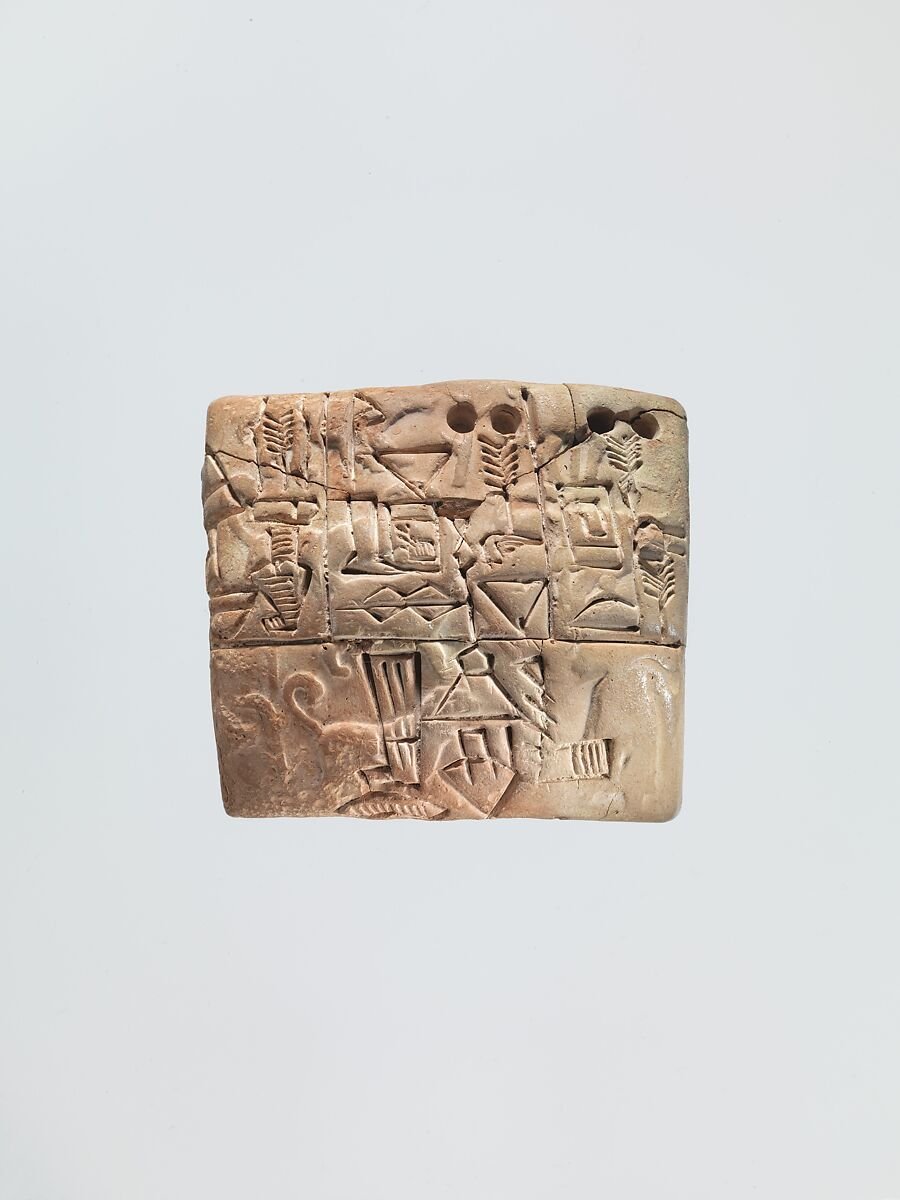
A ruler could not govern alone. Officials supervised resources, palace activities and military obligations. Scribes recorded transactions and decisions, making administration less dependent on oral memory. Statues such as that of Ebih-Il, an official from Mari around 2400 BCE, reveal the status of individuals associated with these institutions.
In Egypt, royal government united the Nile valley and delta within a much larger territorial framework. Officials represented the ruler in different areas and helped manage taxation, agricultural production and public works. The title “pharaoh”, familiar from Egyptian history, expresses royal authority, although its use developed over time. These early states combined personal kingship with institutions capable of carrying out commands across a territory.
Royal images and military power
The Egyptian king’s appearance communicated his position. The double crown, or pschent, combined the crowns of Upper and Lower Egypt and symbolised control of both regions. The protective cobra, or uraeus, and ceremonial false beard also connected kingship with sacred power. These attributes made royal images recognisable even without a written explanation.
Ramesses II, who ruled from 1279 to 1213 BCE, provides a much later illustration of Egyptian kingship. At Abu Simbel, monumental representations presented him as a powerful ruler close to the gods. His accounts of the battle of Qadesh against the Hittites celebrated victory. Historians compare such claims with other evidence because royal monuments were designed to promote a ruler’s authority, not to provide an impartial report.
Religion and the legitimacy of rulers
Mesopotamian and Egyptian societies were polytheistic: they worshipped many gods. Temples organised rites, offerings and festivals, and rulers claimed a privileged relationship with divine powers. By building sanctuaries and supporting worship, kings represented themselves as protectors of the community and of the proper order of the world.
Egyptian stories about Osiris linked legitimate kingship, death and renewal. In the myth, Osiris brings order and knowledge, but his brother Seth kills him. Isis, assisted by other divine figures, restores his body; their son Horus eventually defeats Seth and inherits kingship. Osiris becomes ruler of the dead. This is evidence about Egyptian beliefs and political imagination, rather than a literal account of Egypt’s first rulers.
Preserving the dead
Egyptians believed that survival after death required appropriate treatment of the body and remembrance of the deceased. Embalmers removed or treated internal organs, dried the body using natron and wrapped it in linen. Practices varied with period and wealth. The Greek author Herodotus described embalming in the fifth century BCE, long after the formation of the earliest Egyptian state; his account must therefore be placed in its own historical setting.
Mummies were placed in coffins or sarcophagi, and tombs could contain food, furniture and other equipment for the afterlife. Canopic containers held selected organs. Royal burial forms changed over time: the Valley of the Kings belongs to a later phase of Egyptian history, not to the age of the first pyramids.
Judgement and the afterlife
Texts commonly called the Book of the Dead offered spells and guidance for the deceased. In a familiar judgement scene, the heart is weighed against the feather associated with Ma’at, the principle of truth and order. Anubis supervises the weighing, Thoth records the result, and Osiris presides over the realm of the dead. The devouring creature Ammit threatens those who fail the judgement.
These images connect moral conduct, ritual knowledge and hopes of continued existence. Together with palaces, administrative records and royal monuments, they show how political and religious authority reinforced one another. Early states were systems of power supported not only by force and resources, but also by shared ideas about order and legitimacy.
Revision questions
Write an answer before opening the explanation. Your answers stay in this browser.
01 How did rivers and agricultural territories support the first states?
Read the explanation
Mari, beside the Euphrates in present-day Syria, offers a later example of this organisation. Waterways supported transport, fishing and exchange, and a canal brought water into the city. The royal palace was more than a residence: it was a centre from which people, goods and obligations were managed. The surviving palace of Zimri-Lim belongs to the second millennium BCE, reminding us that these institutions developed over many centuries.
02 Why did kings need officials and written records?
Read the explanation
In Egypt, royal government united the Nile valley and delta within a much larger territorial framework. Officials represented the ruler in different areas and helped manage taxation, agricultural production and public works. The title “pharaoh”, familiar from Egyptian history, expresses royal authority, although its use developed over time. These early states combined personal kingship with institutions capable of carrying out commands across a territory.
03 How could religion help justify a ruler's authority?
Read the explanation
Egyptian stories about Osiris linked legitimate kingship, death and renewal. In the myth, Osiris brings order and knowledge, but his brother Seth kills him. Isis, assisted by other divine figures, restores his body; their son Horus eventually defeats Seth and inherits kingship. Osiris becomes ruler of the dead. This is evidence about Egyptian beliefs and political imagination, rather than a literal account of Egypt’s first rulers.
04 Explain the significance of the weighing of the heart in Egyptian beliefs.
Read the explanation
These images connect moral conduct, ritual knowledge and hopes of continued existence. Together with palaces, administrative records and royal monuments, they show how political and religious authority reinforced one another. Early states were systems of power supported not only by force and resources, but also by shared ideas about order and legitimacy.