The Gupta dynasty dominated much of northern India between the fourth and sixth centuries CE. Its rulers expanded their power through conquest, marriage alliances and agreements with other rulers. The period is associated with major achievements in literature, art, mathematics and astronomy. Describing it as a golden age highlights these achievements, but should not imply that all inhabitants enjoyed peace or prosperity equally.
The formation of Gupta power
India had a long history of cities, kingdoms and empires before the Guptas. The Mauryan Empire, for example, had united large territories centuries earlier. Gupta rule was therefore not the beginning of Indian civilisation or India's first empire. Nor was it simply a delayed response to Alexander's expedition in 326 BCE.
Chandragupta I strengthened the dynasty in the early fourth century, around the beginning of the Gupta era in 319-320 CE. His successors, including Samudragupta and Chandragupta II, extended Gupta influence. Some territories were governed more directly, while other rulers acknowledged Gupta supremacy. Royal titles and inscriptions proclaimed exceptional power, but such claims also served to glorify the dynasty.
Agriculture, crafts and trade supported the economy. Coins offer evidence of kingship, wealth and religious imagery, while inscriptions record gifts, victories and relations with local elites. These sources are valuable precisely because they can be examined critically: a royal inscription describes the ruler as he wished to be remembered.
Religious traditions and society
Gupta rulers supported Hindu religious traditions, particularly forms of worship associated with Vishnu, while Buddhist and Jain communities also remained active. Hinduism included diverse beliefs, rituals and philosophical traditions rather than a single uniform practice. Sacred literature included the Vedas, and epics such as the Ramayana and Mahabharata connected moral questions with stories of gods, heroes and royal families.
Beliefs about rebirth, action and its consequences, and liberation were important in Indian religious thought, although traditions interpreted them differently. Social life was marked by hierarchies of status and occupation. The broad categories called varnas and the many more specific communities known as jatis should not be reduced to a simple diagram describing every person's life in the same way.
Buddhist teachings offered paths toward liberation from suffering, and monasteries linked religious learning with patronage and travel. The presence of several traditions suggests forms of coexistence, but it does not establish complete equality or the absence of conflict throughout the period.
Literature, knowledge and artistic patronage
Sanskrit flourished as a language of literature and learned culture. It is a language, not the name of a single writing system. The poet and dramatist Kalidasa is closely associated with the cultural world of this period. His works illustrate the sophistication of courtly literature and its engagement with love, kingship and religious traditions.
Mathematics and astronomy also developed. Aryabhata, writing near the end of the fifth century, is one important example of this intellectual activity. These achievements belonged to continuing traditions of observation, calculation and debate. They should not be compressed into claims that every later Indian discovery was invented by one Gupta ruler or at one moment.
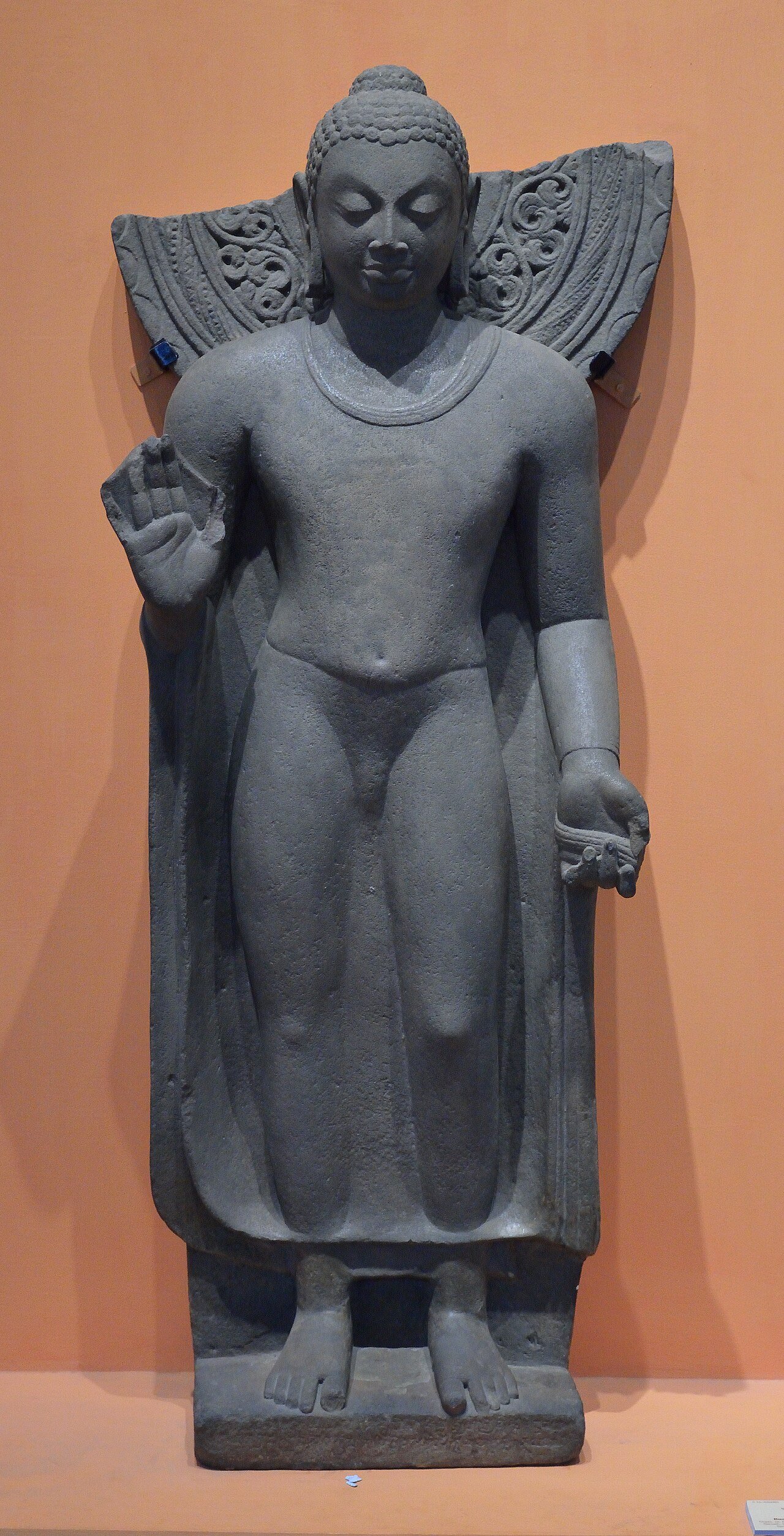
Sculptors created influential representations of Hindu deities and the Buddha. Temples, statues and painted religious spaces were supported by rulers and other patrons. Artistic styles travelled beyond political boundaries, so an object from the Gupta cultural period need not have been commissioned by the Gupta court itself.
Ajanta and the wider cultural world
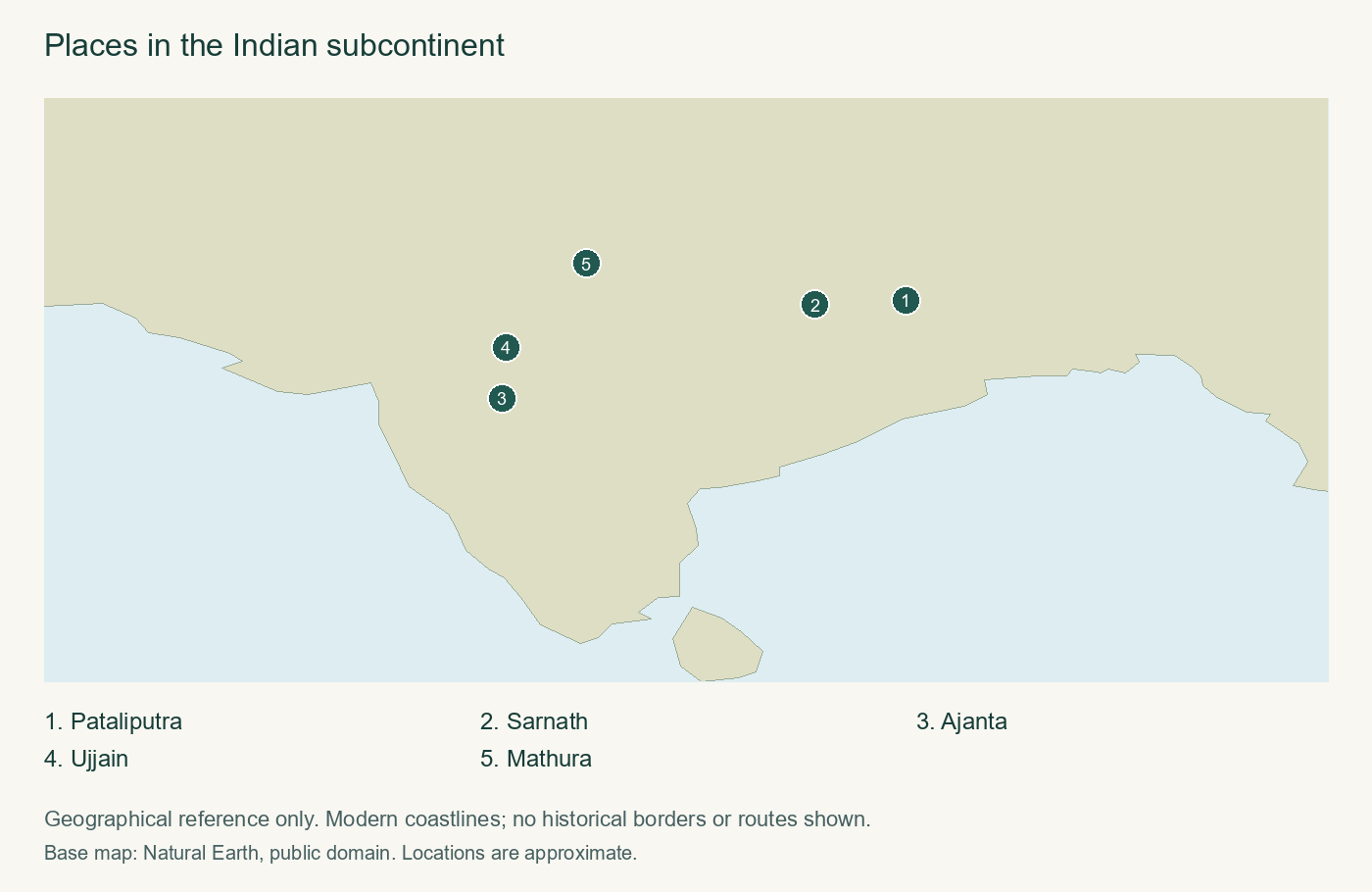
The Buddhist caves at Ajanta, in western India, contain monasteries, worship halls, sculpture and paintings. Construction occurred in several phases, beginning before Gupta rule and expanding notably during the fifth century. Much of the later patronage belonged to the neighbouring Vakataka political world. Ajanta therefore illustrates a wider cultural flowering, not simply a Gupta imperial building programme.
The paintings depict religious narratives and aspects of courtly and social life. They reveal artistic techniques and the values of their patrons, while requiring care as historical evidence: a religious scene is not a photograph of everyday society. Gupta political power weakened during the later fifth and sixth centuries, but the period's literary, artistic and intellectual influence continued long after the dynasty's decline.
Revision questions
Write an answer before opening the explanation. Your answers stay in this browser.
01 Why were the Guptas not the founders of India's first empire?
Read the explanation
Chandragupta I strengthened the dynasty in the early fourth century, around the beginning of the Gupta era in 319-320 CE. His successors, including Samudragupta and Chandragupta II, extended Gupta influence. Some territories were governed more directly, while other rulers acknowledged Gupta supremacy. Royal titles and inscriptions proclaimed exceptional power, but such claims also served to glorify the dynasty.
Agriculture, crafts and trade supported the economy. Coins offer evidence of kingship, wealth and religious imagery, while inscriptions record gifts, victories and relations with local elites. These sources are valuable precisely because they can be examined critically: a royal inscription describes the ruler as he wished to be remembered.
02 What forms of religious diversity existed in Gupta-period India?
Read the explanation
Beliefs about rebirth, action and its consequences, and liberation were important in Indian religious thought, although traditions interpreted them differently. Social life was marked by hierarchies of status and occupation. The broad categories called varnas and the many more specific communities known as jatis should not be reduced to a simple diagram describing every person's life in the same way.
Buddhist teachings offered paths toward liberation from suffering, and monasteries linked religious learning with patronage and travel. The presence of several traditions suggests forms of coexistence, but it does not establish complete equality or the absence of conflict throughout the period.
03 Describe two areas of intellectual or artistic achievement in this period.
Read the explanation
Mathematics and astronomy also developed. Aryabhata, writing near the end of the fifth century, is one important example of this intellectual activity. These achievements belonged to continuing traditions of observation, calculation and debate. They should not be compressed into claims that every later Indian discovery was invented by one Gupta ruler or at one moment.
Sculptors created influential representations of Hindu deities and the Buddha. Temples, statues and painted religious spaces were supported by rulers and other patrons. Artistic styles travelled beyond political boundaries, so an object from the Gupta cultural period need not have been commissioned by the Gupta court itself.
04 Why should Ajanta be understood in a wider context than Gupta royal patronage alone?
Read the explanation
The paintings depict religious narratives and aspects of courtly and social life. They reveal artistic techniques and the values of their patrons, while requiring care as historical evidence: a religious scene is not a photograph of everyday society. Gupta political power weakened during the later fifth and sixth centuries, but the period's literary, artistic and intellectual influence continued long after the dynasty's decline.