Ancient Egypt developed along the Nile, where fertile farmland contrasted sharply with the surrounding deserts. Around the end of the fourth millennium BCE, rulers brought the valley and delta into an increasingly unified state. During the third millennium, kings and officials organised resources on a large scale, and the pyramids became striking expressions of royal power. Agriculture, administration and religious belief were closely connected.
The Nile and the formation of a kingdom
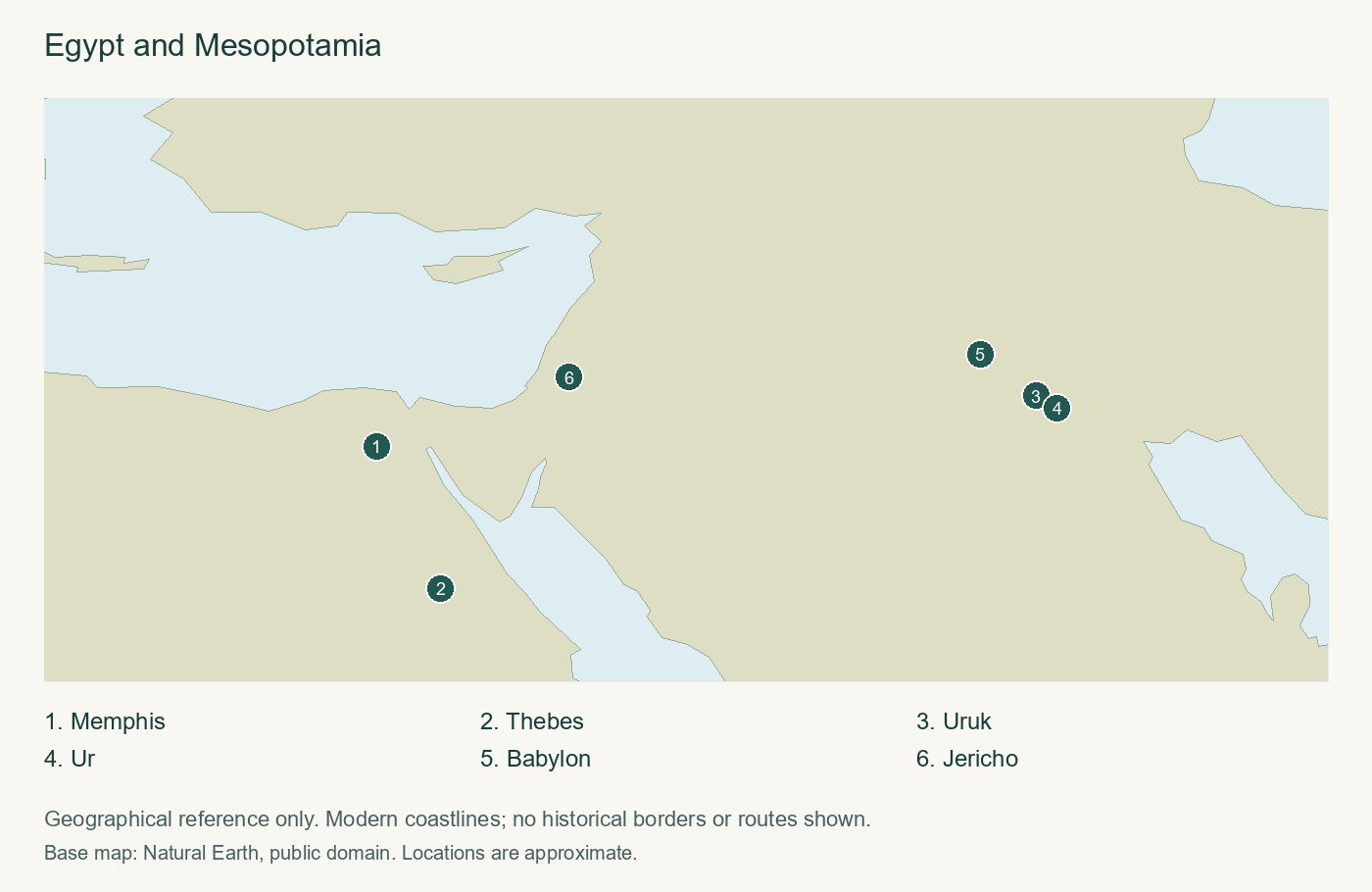
Upper Egypt lay along the Nile valley to the south, while Lower Egypt occupied the northern delta. These names follow the river's course: the Nile flows northward toward the Mediterranean. Its floods deposited fertile material and made agriculture possible in an otherwise arid environment. Canals, embankments and cooperation helped communities manage water, but the flood could be too low or dangerously high.
The unification of Egypt was a process rather than a single event known with certainty. Later tradition associated it with Menes, while early royal objects prominently feature Narmer. Historians compare such evidence instead of assuming that every later story identifies the first king exactly.
The river also provided a transport route. Boats carried people, grain and building materials between settlements. Geography thus helped rulers connect distant areas, although maintaining authority still required officials, supplies and local cooperation.
Kingship and administration
The ruler, commonly called the pharaoh, was associated with divine authority and the maintenance of order. Egyptian ideas of ma'at linked truth, justice and the proper balance of the world. Royal images presented the king as the protector of the country and mediator between people and gods. Crowns and ceremonial objects expressed his authority over the land.
The king could not govern alone. High officials, including the vizier, coordinated administration; regional officials managed local affairs. Scribes recorded deliveries, labour and taxes, often paid in goods such as grain. Literacy was specialised, but scribes were not literally the only people who could read or write.
These records enabled rulers and large institutions to store resources and organise work. Writing therefore served practical government as well as religious and royal display. Official images describe an ideal of powerful kingship; they should not be taken as proof that every royal command was carried out without difficulty.
Work and social differences
Most Egyptians worked in agriculture, growing cereals and flax and raising animals. Farming followed the changing conditions of the Nile: flooding, cultivation and harvest shaped the year. Households owed produce or labour to powerful institutions and landholders. Their lives varied according to access to land, resources and local authority.
Craftspeople produced pottery, textiles, tools, jewellery and decorated objects. Some worked for palaces, temples or elite households, receiving provisions as part of their support. Soldiers and labourers also served the state, but the army and systems of dependence changed across the long history of Egypt. Arrangements known from later kingdoms should not automatically be assigned to the third millennium.
Society was unequal, yet a diagram dividing everyone into a few fixed groups hides much of its complexity. In particular, the pyramids should not be explained simply as the work of enslaved people. Evidence points to organised workforces that included skilled specialists and labourers supported through substantial provisioning systems.
Pyramids and the Old Kingdom
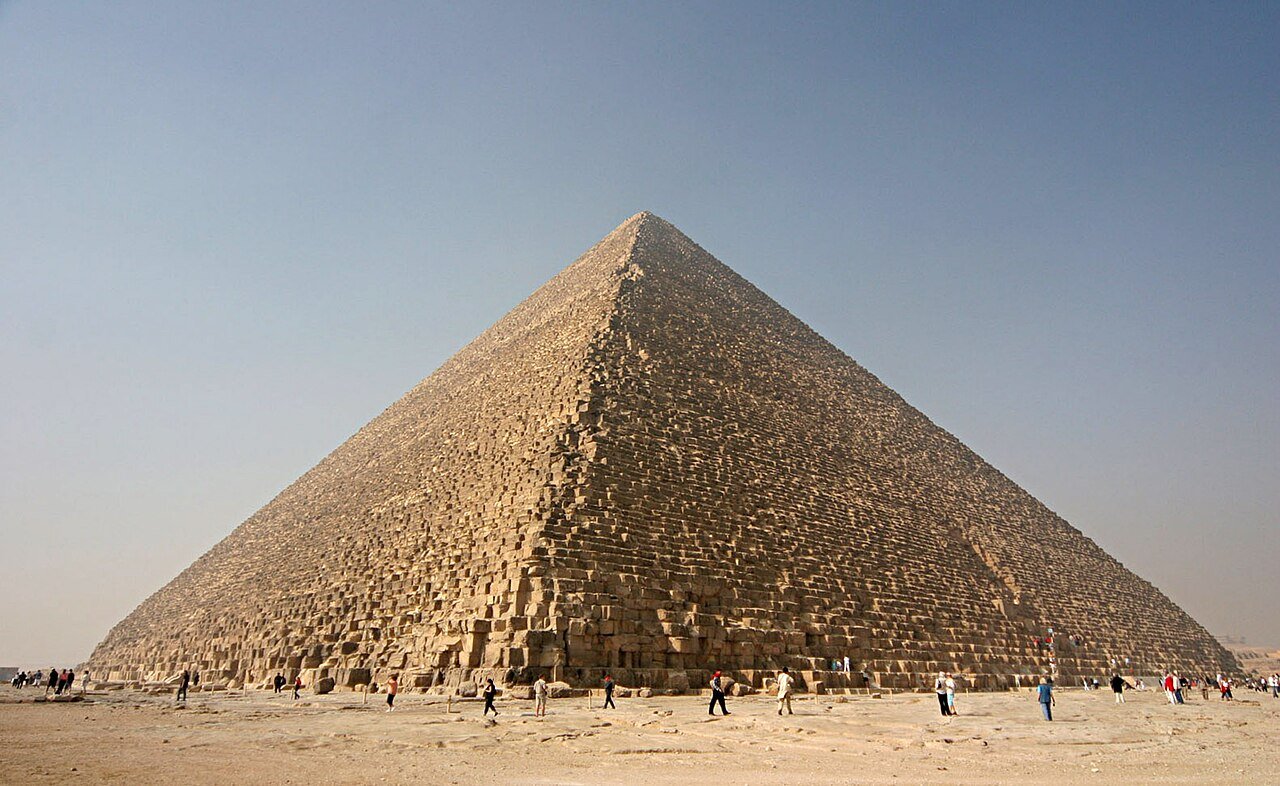
The Old Kingdom occupies much of the third millennium BCE. Royal tombs developed from earlier forms into increasingly ambitious pyramids. The Step Pyramid associated with Djoser at Saqqara and the pyramids of Khufu and his successors at Giza show changes in building techniques and royal ambition.
A pyramid belonged to a larger funerary complex with temples and facilities for offerings. Construction required planning, quarrying, transport, skilled stonework and the feeding of workers. These buildings therefore reveal administrative capacity as well as religious beliefs. Their scale depended on resources collected from a wider society.
Royal power was not equally strong throughout Egyptian history. Provincial elites and economic or environmental pressures could weaken central control. The end of the Old Kingdom reminds us that the state developed and changed rather than remaining identical for three thousand years.
Gods, death and the interpretation of evidence
Egyptians honoured many gods, including solar deities and figures such as Horus, Isis and Osiris. Their forms, importance and relationships varied across places and periods. Priests conducted rituals within temples, while religious life also included festivals, household practices and personal acts of devotion.
Belief in an afterlife encouraged care for the body, offerings and tombs. Mummification techniques developed over time and differed according to resources. Later funerary texts famously describe the weighing of the heart against the feather of ma'at before Osiris. These images help explain Egyptian beliefs, but their best-known surviving forms should not all be treated as direct evidence for the third millennium.
The central connection was between order in life and continued existence after death. Tomb paintings, inscriptions and objects illuminate this worldview, while reflecting the wealth and aims of those who commissioned them. Reading them critically allows historians to explain Egyptian society without confusing religious ideals with a complete description of ordinary life.
Revision questions
Write an answer before opening the explanation. Your answers stay in this browser.
01 How did the Nile help farming, transport and state formation?
Read the explanation
The unification of Egypt was a process rather than a single event known with certainty. Later tradition associated it with Menes, while early royal objects prominently feature Narmer. Historians compare such evidence instead of assuming that every later story identifies the first king exactly.
The river also provided a transport route. Boats carried people, grain and building materials between settlements. Geography thus helped rulers connect distant areas, although maintaining authority still required officials, supplies and local cooperation.
02 How did religious kingship work together with administration?
Read the explanation
The king could not govern alone. High officials, including the vizier, coordinated administration; regional officials managed local affairs. Scribes recorded deliveries, labour and taxes, often paid in goods such as grain. Literacy was specialised, but scribes were not literally the only people who could read or write.
These records enabled rulers and large institutions to store resources and organise work. Writing therefore served practical government as well as religious and royal display. Official images describe an ideal of powerful kingship; they should not be taken as proof that every royal command was carried out without difficulty.
03 What do pyramid complexes reveal beyond the wealth of individual kings?
Read the explanation
A pyramid belonged to a larger funerary complex with temples and facilities for offerings. Construction required planning, quarrying, transport, skilled stonework and the feeding of workers. These buildings therefore reveal administrative capacity as well as religious beliefs. Their scale depended on resources collected from a wider society.
04 Why must Egyptian funerary beliefs be placed in their particular historical periods?
Read the explanation
Belief in an afterlife encouraged care for the body, offerings and tombs. Mummification techniques developed over time and differed according to resources. Later funerary texts famously describe the weighing of the heart against the feather of ma'at before Osiris. These images help explain Egyptian beliefs, but their best-known surviving forms should not all be treated as direct evidence for the third millennium.
The central connection was between order in life and continued existence after death. Tomb paintings, inscriptions and objects illuminate this worldview, while reflecting the wealth and aims of those who commissioned them. Reading them critically allows historians to explain Egyptian society without confusing religious ideals with a complete description of ordinary life.