Athenian democracy was a system in which male citizens participated directly in the government of their city-state. It developed through reforms and conflicts, reaching its best-known form during the fifth and fourth centuries BCE. Its institutions created significant opportunities for political participation, but excluded much of the population and operated within a society shaped by slavery and empire.
Athens and its resources
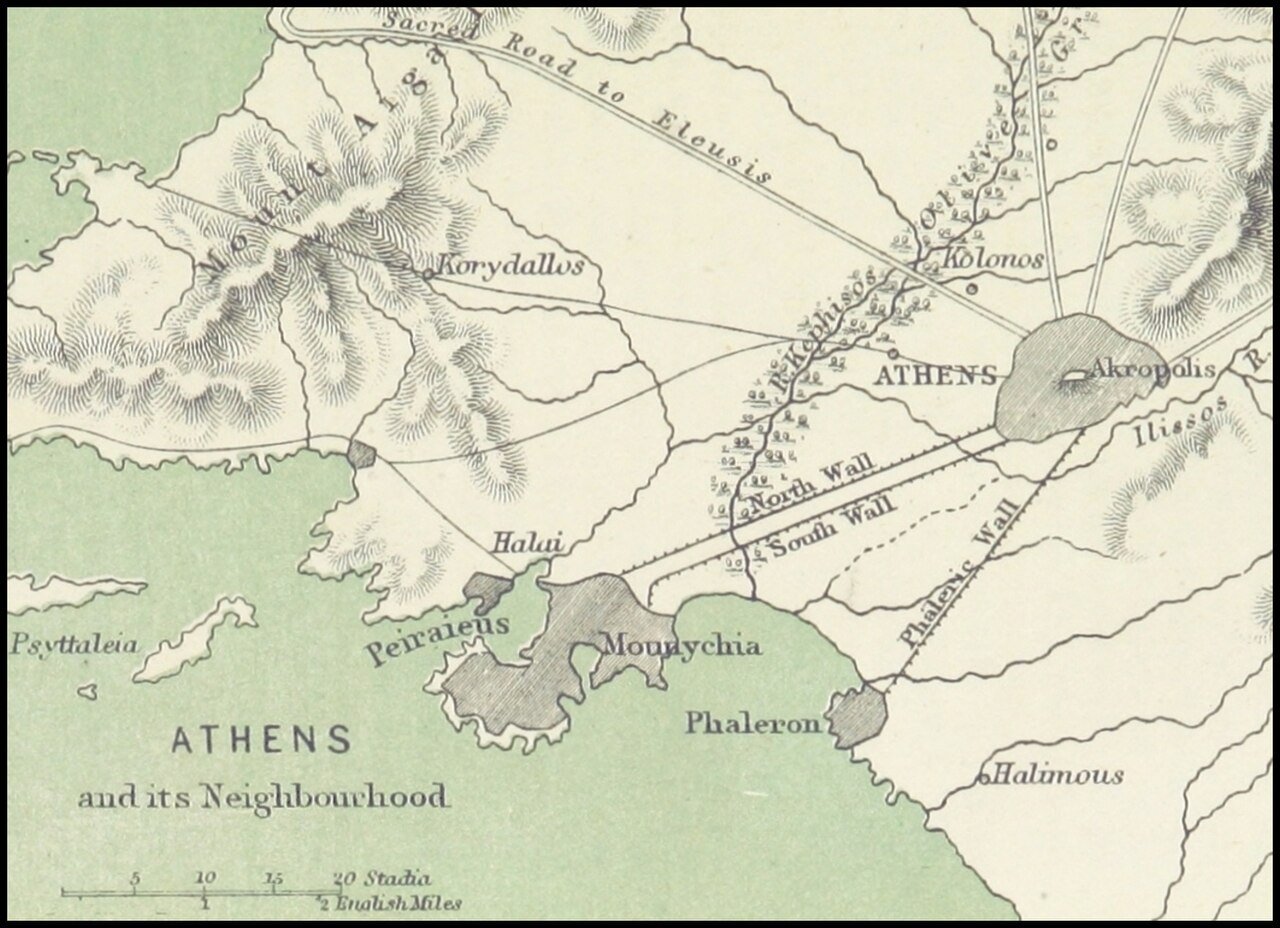
Athens governed Attica, a territory containing farmland, smaller settlements, silver mines at Laurion and marble quarries. Its port at Piraeus connected the city with Mediterranean trade. Olive oil, wine and pottery were exported, while grain and other materials were imported. The Long Walls later linked Athens to its port, helping sustain the city’s maritime power.
The Acropolis was a religious centre associated with Athena, whose owl appeared on Athenian coins. Civic life was not separate from religion. The Panathenaea celebrated Athena with processions, sacrifices and competitions; the offering of a new robe, or peplos, expressed the community’s relationship with its patron goddess. Different groups participated in religious life even when their political rights were unequal.
Who belonged to the political community?
Adult male citizens possessed political rights. Citizenship depended on descent and registration, with rules changing over time. Pericles’ law of 451 BCE required Athenian parentage on both sides. Athenian women could belong to citizen families and transmit civic status, but could not vote or hold the political offices available to men. Describing them simply as foreigners or as having no civic identity would be inaccurate.
Metics were free resident foreigners who contributed taxes, labour and military service without ordinary citizen political rights. Enslaved people worked in households, workshops, mines and public roles and lacked personal freedom. Population estimates vary, but male citizens formed a minority of the people living in Attica. Democracy therefore meant rule by the recognised citizen body, not universal adult participation.
The development of democracy
Athens moved from aristocratic dominance through periods of reform and personal rule. Solon’s reforms in the early sixth century BCE addressed debt and political tensions while maintaining distinctions based on wealth. In 508-507 BCE, Cleisthenes reorganised citizens into ten tribes that connected different areas of Attica. This weakened older networks of elite influence and provided a foundation for broader participation.
Further changes in the fifth century strengthened popular institutions. Payment for jury service, associated with Pericles, made participation more practical for poorer citizens who otherwise lost working time. These developments were contested rather than inevitable. Wealth, family connections and skill in public speaking continued to influence political life.
The Assembly, Council and courts
The Ecclesia, or Assembly, allowed citizens to debate and decide major questions, including war, alliances and public policy. It met on the Pnyx. The Council of Five Hundred, or Boule, prepared business and carried out administrative responsibilities. Fifty members came from each tribe, connecting the institution with Cleisthenes’ organisation of the citizen body.
Many offices and jury positions were filled by lot. Selection by chance was intended to distribute participation and reduce the influence of wealth and organised patronage. Military commanders, the strategoi, were elected because experience and judgement were considered particularly important. Popular courts involved large numbers of citizen jurors and played an important role in accountability.
Ostracism offered another means of managing political tensions. Citizens could vote a prominent individual into exile for ten years by writing names on pottery fragments called ostraka. It was intended to prevent dangerous concentrations of power, although political rivalry could shape its use. It differed from a criminal conviction and normally did not remove the person’s property or citizenship.
Democracy and imperial power
Victories during the Persian Wars increased Athens’ influence. In 478 BCE, it became leader of the Delian League, an alliance organised against Persia. Contributions of ships and money increasingly supported Athenian power. The transfer of the alliance treasury to Athens in 454 BCE symbolised the city’s growing control, while attempts by allies to leave could meet force.
The rebuilding of the Acropolis, including the Parthenon constructed between 447 and 432 BCE, expressed wealth, religious devotion and civic prestige. Allied resources contributed to the wider financial setting of Athenian power. The contrast was striking: citizens celebrated political freedom at home while Athens restricted the independence of other communities.
War, defeat and the limits of the system
The Peloponnesian War, fought from 431 to 404 BCE, opposed Athens and its allies to Sparta and its coalition. Plague, Pericles’ death in 429, and the disastrous Sicilian expedition of 415-413 weakened Athens. Spartan naval success, supported by Persian resources, led to Athenian surrender in 404. The democratic system also experienced internal overthrow and restoration.
Athens’ defeat did not erase the idea of citizen participation, but its institutions must be understood in their own setting. Slavery, unequal citizenship and imperial revenue helped sustain society without giving every citizen an identical life of leisure. Ancient democracy was direct and restricted; modern democracies generally use representatives and recognise much wider citizenship. The comparison is useful when it identifies both historical innovations and fundamental differences.
Revision questions
Write an answer before opening the explanation. Your answers stay in this browser.
01 Who could participate in Athenian political institutions, and who was excluded?
Read the explanation
Metics were free resident foreigners who contributed taxes, labour and military service without ordinary citizen political rights. Enslaved people worked in households, workshops, mines and public roles and lacked personal freedom. Population estimates vary, but male citizens formed a minority of the people living in Attica. Democracy therefore meant rule by the recognised citizen body, not universal adult participation.
02 Why was Athenian democracy the result of a historical development?
Read the explanation
Further changes in the fifth century strengthened popular institutions. Payment for jury service, associated with Pericles, made participation more practical for poorer citizens who otherwise lost working time. These developments were contested rather than inevitable. Wealth, family connections and skill in public speaking continued to influence political life.
03 How did the Assembly, Council and courts distribute political work?
Read the explanation
Many offices and jury positions were filled by lot. Selection by chance was intended to distribute participation and reduce the influence of wealth and organised patronage. Military commanders, the strategoi, were elected because experience and judgement were considered particularly important. Popular courts involved large numbers of citizen jurors and played an important role in accountability.
Ostracism offered another means of managing political tensions. Citizens could vote a prominent individual into exile for ten years by writing names on pottery fragments called ostraka. It was intended to prevent dangerous concentrations of power, although political rivalry could shape its use. It differed from a criminal conviction and normally did not remove the person’s property or citizenship.
04 What tension existed between democracy in Athens and its power over allies?
Read the explanation
The rebuilding of the Acropolis, including the Parthenon constructed between 447 and 432 BCE, expressed wealth, religious devotion and civic prestige. Allied resources contributed to the wider financial setting of Athenian power. The contrast was striking: citizens celebrated political freedom at home while Athens restricted the independence of other communities.