The Treaty of Versailles regulated peace between Germany and the victorious Allies after the First World War. Signed on 28 June 1919, it entered into force on 10 January 1920. Its terms changed Germany's borders, restricted its armed forces and established reparations obligations. Understanding the treaty requires precise distinctions between sovereignty, occupation, demilitarisation and economic rights, which were not the same thing.
Responsibility and reparations
Article 231 established the responsibility of Germany and its allies for the loss and damage caused by the war imposed through their aggression. It provided a legal foundation for reparations, or compensation for wartime damage. Germans widely called it the war guilt clause and interpreted it as a declaration of sole responsibility for starting the war. The clause's legal wording and its public interpretation were therefore different aspects of its significance.
The treaty did not contain the final figure of 132 billion gold marks, commonly expressed at the time as about £6.6 billion. That total was fixed in 1921. Obligations could involve goods and resources as well as money. Later disputes about payment, enforcement and revision belong to the history of implementing the treaty, rather than to its original signing alone.
Changes to Germany's western and northern borders
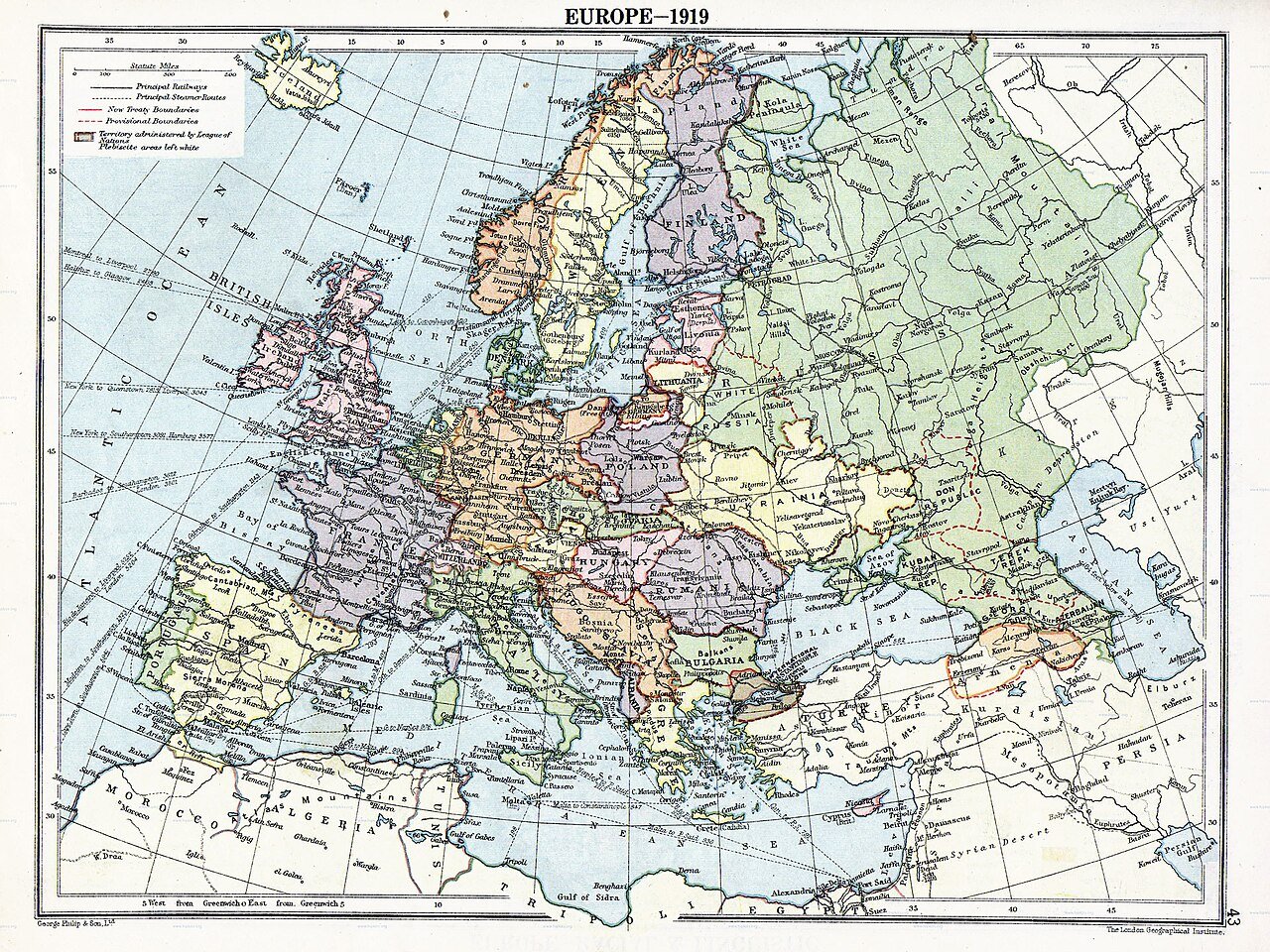
Alsace-Lorraine returned to France, reversing the German annexation of 1871. Eupen-Malmedy passed to Belgium following the process set out in the settlement. In Schleswig, plebiscites in 1920 led to the northern zone joining Denmark, while the southern zone remained German. A plebiscite is a vote on a territory's political future.
The Saar was placed under League of Nations administration for fifteen years. France received ownership of its coal mines as compensation for wartime destruction. A plebiscite was then to determine the territory's future; in 1935 a large majority voted for reunion with Germany. French economic rights did not mean that the entire territory had simply become a permanent French province.
Overall, Germany lost about thirteen per cent of its pre-war European territory and roughly a tenth of its population. Exact percentages depend on the boundaries and populations counted, but the central point is the loss of land, people and productive resources, not the exaggerated claim that Germany lost everything.
Poland, Danzig and disputed national claims
The restoration of an independent Poland required decisions about areas with mixed populations and important economic interests. Much of Posen and West Prussia passed to Poland. The resulting Polish Corridor provided access to the Baltic Sea but separated East Prussia from the rest of Germany by land.
Danzig, a port with a predominantly German-speaking population, became a Free City under League protection, with special rights for Poland. It was neither simply annexed to Poland nor left under ordinary German sovereignty. These arrangements sought to reconcile competing claims, but they created lasting grievances.
Upper Silesia, valuable for its mines and industry, held a plebiscite in 1921. The result, local population patterns and conflict did not produce an uncontested border. The region was partitioned between Germany and Poland, with arrangements intended to preserve economic connections and protect minorities. This illustrates why self-determination rarely produced a simple answer in areas with intermingled populations.
Disarmament and the Rhineland
Germany's army was limited to 100,000 men and conscription was prohibited. Tanks, an air force and submarines were forbidden. The navy was restricted, including a maximum of six battleships of specified types and 15,000 personnel. These measures aimed to reduce Germany's ability to wage another major war.
The Rhineland remained German territory, but German troops and fortifications were prohibited on the left bank of the Rhine and within a zone extending fifty kilometres east of it. Allied occupation of areas west of the Rhine and bridgeheads was intended to provide a temporary guarantee, with withdrawal linked to compliance. Demilitarisation and occupation were therefore related but distinct arrangements.
France regarded these restrictions as protection against another invasion. Many Germans regarded them as unequal and humiliating, especially when wider disarmament did not follow as hoped. The treaty limited military power legally without removing Germany's population, industrial potential or military knowledge.
Colonies and diplomatic restrictions
Germany lost its overseas colonies. They became mandates administered under League oversight by powers including Britain, France, Japan and British dominions. The system was presented as an international responsibility, but colonial peoples did not receive immediate independence. European self-determination was therefore not extended consistently to the wider world.
Union between Germany and Austria, known as Anschluss, was prohibited without the approval required by the settlement. Germany was not initially a member of the League of Nations, although it later joined in 1926. The treaty constrained Germany's international position while leaving open the possibility of later diplomatic change.
Assessing the settlement
The treaty's effects crossed categories. Losing an industrial region had economic consequences as well as territorial and emotional significance. Army reductions reduced military capacity but also affected employment and the political attitudes of veterans. Reparations raised questions about both resources and responsibility.
A balanced judgement must consider the devastation suffered by the victors alongside the constraints imposed on Germany. It should also distinguish criticism of specific clauses from later nationalist propaganda. The treaty created tensions and opportunities for political exploitation, but its long-term consequences depended on how governments enforced, revised or violated it.
Revision questions
Write an answer before opening the explanation. Your answers stay in this browser.
01 Distinguish Article 231, reparations liability and the total fixed in 1921.
Read the explanation
The treaty did not contain the final figure of 132 billion gold marks, commonly expressed at the time as about £6.6 billion. That total was fixed in 1921. Obligations could involve goods and resources as well as money. Later disputes about payment, enforcement and revision belong to the history of implementing the treaty, rather than to its original signing alone.
02 How did the settlement treat Alsace-Lorraine and the Saar differently?
Read the explanation
The Saar was placed under League of Nations administration for fifteen years. France received ownership of its coal mines as compensation for wartime destruction. A plebiscite was then to determine the territory's future; in 1935 a large majority voted for reunion with Germany. French economic rights did not mean that the entire territory had simply become a permanent French province.
03 Why were the Polish Corridor, Danzig and Upper Silesia difficult territorial questions?
Read the explanation
Danzig, a port with a predominantly German-speaking population, became a Free City under League protection, with special rights for Poland. It was neither simply annexed to Poland nor left under ordinary German sovereignty. These arrangements sought to reconcile competing claims, but they created lasting grievances.
Upper Silesia, valuable for its mines and industry, held a plebiscite in 1921. The result, local population patterns and conflict did not produce an uncontested border. The region was partitioned between Germany and Poland, with arrangements intended to preserve economic connections and protect minorities. This illustrates why self-determination rarely produced a simple answer in areas with intermingled populations.
04 Describe the military restrictions and distinguish demilitarisation from occupation.
Read the explanation
The Rhineland remained German territory, but German troops and fortifications were prohibited on the left bank of the Rhine and within a zone extending fifty kilometres east of it. Allied occupation of areas west of the Rhine and bridgeheads was intended to provide a temporary guarantee, with withdrawal linked to compliance. Demilitarisation and occupation were therefore related but distinct arrangements.
France regarded these restrictions as protection against another invasion. Many Germans regarded them as unequal and humiliating, especially when wider disarmament did not follow as hoped. The treaty limited military power legally without removing Germany's population, industrial potential or military knowledge.