Key question. How did the Aztec and Inca empires rule their peoples, and how connected was the world on the eve of 1492?
In this lesson
- How the Aztecs built an empire based on tribute, trade and sacrifice.
- How Aztec children were brought up and educated.
- How the Incas organised a much more centralised state.
- How women and men lived in “separate but equal” spheres in both empires.
- How religion and trade linked the peoples of the world in 1500.
- Why historians argue about “turning points”.
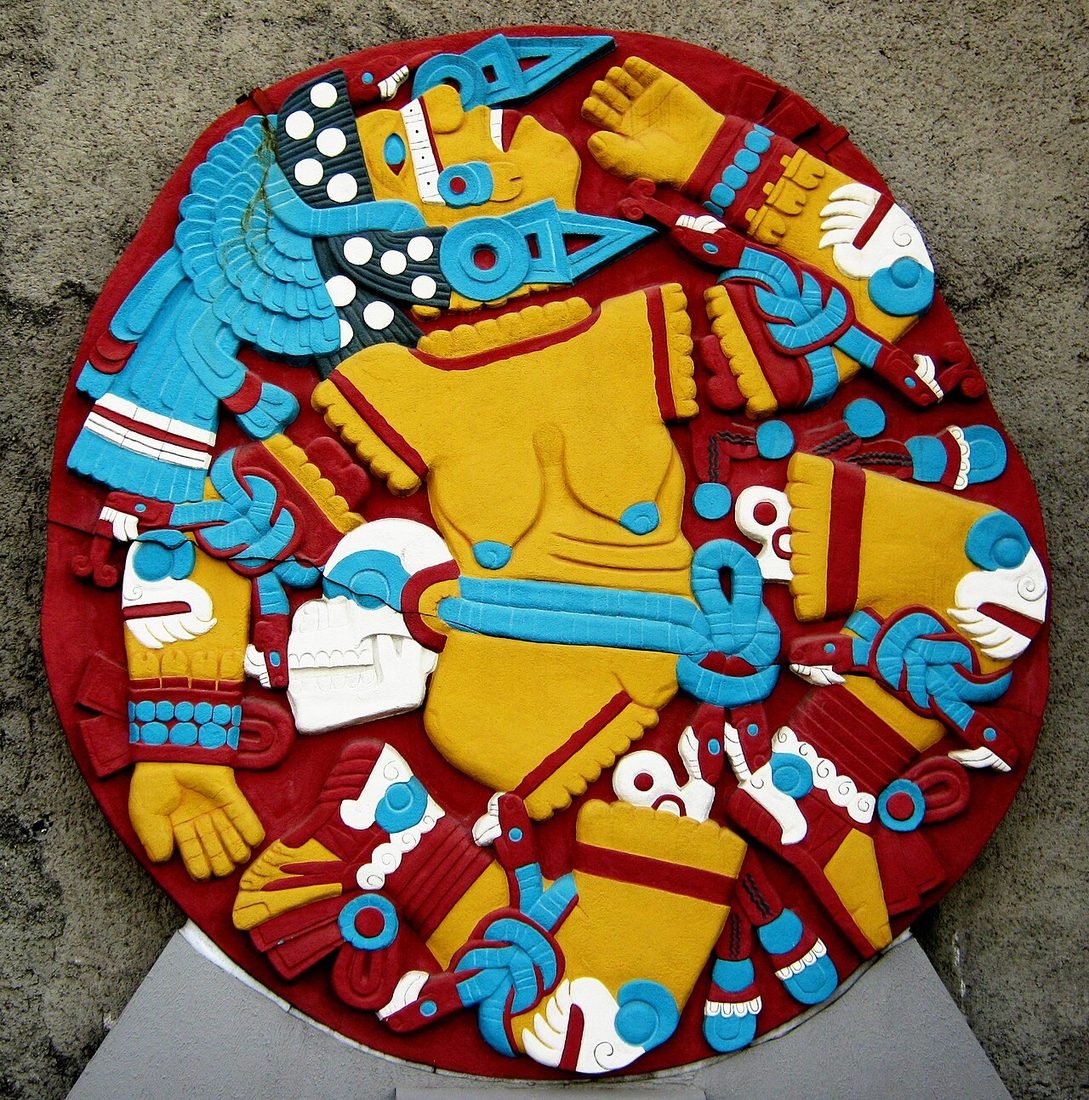
Early in the morning of 21 February 1978, workers from the electricity company were digging a trench in the centre of Mexico City when their shovels struck a huge flat stone. As they cleared the earth, they uncovered a carved disc more than 3 metres across, showing a goddess whose head, arms and legs had been cut from her body. It was Coyolxauhqui, the moon goddess who, in Aztec myth, was killed by her brother Huitzilopochtli, the god of the sun and war. The stone had lain at the foot of the Aztecs’ greatest temple, the Templo Mayor, destroyed by the Spanish more than 450 years earlier. The government decided to demolish the buildings above, and archaeologists uncovered the temple’s ruins, layer after layer, right in the heart of the modern capital.