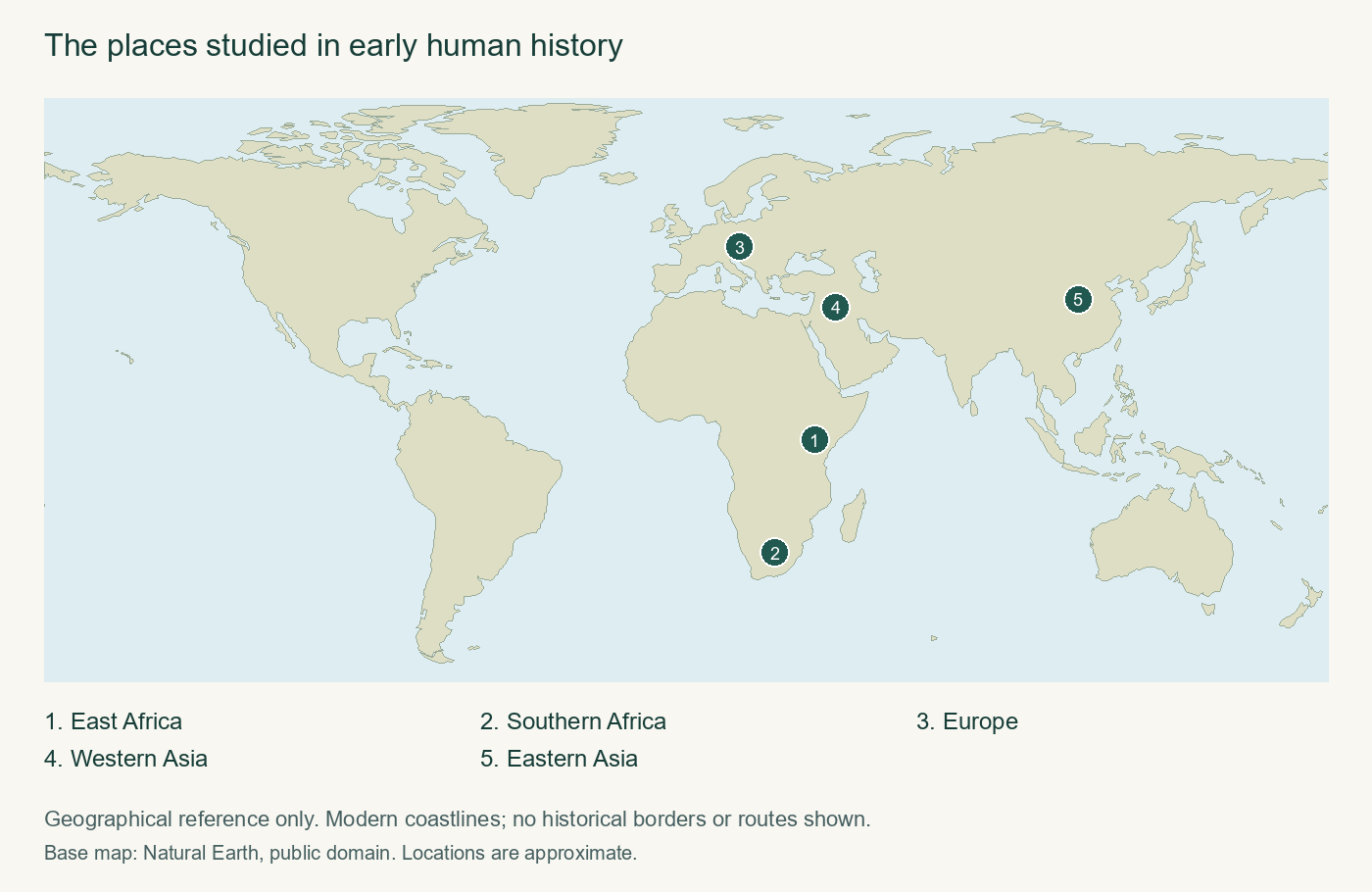
Key question. How did people live for most of human history, before farming, and how did some of them begin to settle down?
In this lesson
- how hunter-gatherers lived in small, mobile and largely equal bands;
- their shelters, tools and technologies;
- Palaeolithic art: cave paintings, figurines and music, and how to interpret them;
- their beliefs and their impact on the environment;
- how some communities settled down before farming, from Japan and California to the Natufians of the Levant.
“We do not want cattle, just wild animals to hunt and water that we can drink.” This was the answer of Gudo Mahiya, a member of the Hadza people of northern Tanzania, when he was asked in 1997 whether he wanted to become a farmer or a cattle herder. The Hadza are one of the very last peoples on Earth to live as all humans lived until 10,000 to 12,000 years ago. In 2018 only about 1,000 Hadza remained, and only a few hundred of them still lived by hunting game, collecting honey, digging up roots and gathering berries. For more than 95 per cent of the time that our species has existed, this way of life was the only one.
The development of farming, permanent settlements and cities was a long series of overlapping changes. People did not suddenly abandon a simple life and become “civilised”. Hunter-gatherers already possessed complex knowledge, technologies and social relationships. Archaeological evidence from Southwest Asia shows that settlement, cultivation, domestication, ritual and political organisation each followed their own history.